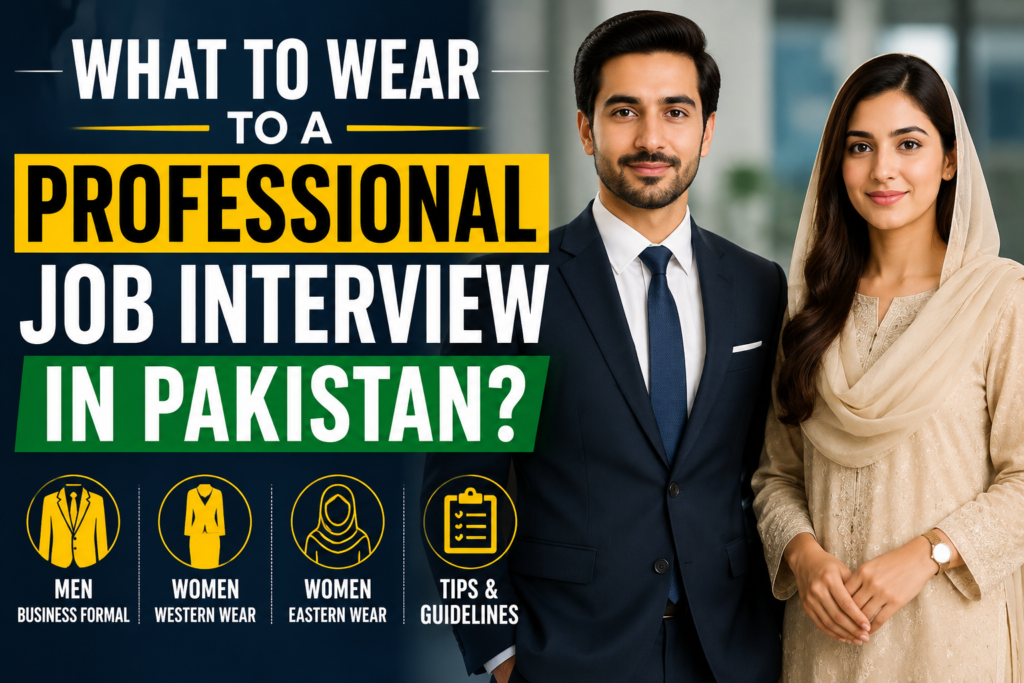
What to Wear to a Professional Job Interview in Pakistan?
What to Wear to a Professional Job Interview in Pakistan? You’ve spent hours tailoring your CV. You’ve rehearsed the Tell me about yourself” answer until 3 AM. Your references are locked and loaded. But then comes that dreaded morning and you are standing in front of your wardrobe the humidity already sticking to your skin, and suddenly your heart starts beat fast. Is this waistcoat looking too desi wedding? Will they think this shirt color is odd? Should I just wear the shalwar kameez or will that look like I’m heading to the mosque?”
Is a simple shalwar kameez too informal for a multinational bank? Will they judge my (leather shoes) if they aren’t polished?
In Pakistan, the job market is ruthless. But here is the secret hiring managers don’t tell you: In the first 7 seconds, your verbal skills don’t matter; your visual discipline does. If you look like you don’t respect the room, the interviewer will assume you won’t respect the deadlines. Let’s fix that anxiety.
Critical Tip: Honestly, in Pakistan, wearing something too fancy? Nobody really minds. But showing up underdressed? You can always loosen your tie if you feel over the top. But if you walk in without a collar at all? Sorry, brother you can’t magically grow one in the parking lot.
What to Wear to a Professional Job Interview in Pakistan?
The Pakistani Corporate Reality Check
Before you go out and spend your hard earned money on a new suit, stop. Take a breath. Not every company in Pakistan expects the same thing. Now follow this tip which are as follows: you should need to dress for their world not just what you feel like wearing.
- MNC/ Big 4 /Corporate Bank: These places like Engro, Unilever, Standard Chartered, PwC. They want the full package. Full sleeves, tie, blazer, and shoes that are actually closed. And listen to me carefully casual Fridays are a thing for employees, not for interviewees. You show up in chinos on a Friday? You’re gone.
- The Local Conglomerate / Textile House: (Nishat, GulAhmed, Packages). Standard: Formal but slightly flexible. A well starched shalwar kameez with a waistcoat is acceptable. A suit is preferred for senior roles.
- The Tech Startup / NGO: Think Careem, IRC, or those small developer shops with beanbags in the office. That works. But don’t get too comfortable ripped jeans are still a no. And sandals? Please. Just no.”
Starch vs Soft Rule
In Pakistan’s weather, we love stiff, starched clothes. But for an interview, do not over starch your collar. If your stiff fabric cuts into your neck you will sweat with itch and lose confidence.
Also Check: How to Write a Professional Resume with No Experience?
For Men Complete Interview Blueprint
You are fighting two battles: the impression of authority and the reality of 40°C heat. Here is your checklist.
The Winners (Do this):
- The Shirt: With solid colors like white, light blue, or very subtle pinstripe. Never wear bright pink or deep purple to a first interview in Pakistan.
- The Trousers: Well pressed, dark grey or charcoal. No chinos, no jeans, no polyester that shines.
- The Footwear: Polished black leather oxfords or Derbies. Brown shoes are risky for banking roles; stick to black.
- The Tie: Silk or good quality polyester. Keep the knot Windsor or Half Windsor tight. Pattern? Small dots or diagonal lines. No cartoon characters.
The Instant Rejections (Don’t do this):
- Open toed sandals (Peshawari chappal is for the darbar, not the boardroom).
- Short sleeve shirts with a tie (Looks like a schoolboy).
- Heavy itr (attar) or cheap deodorant. Go unscented or very light.
Note on the Shalwar Kameez
It is 2024/25. If you are applying for a government job a public sector university or a conservative local firm a starched white/off white kameez with a shalwar and waistcoat is more powerful than a suit. It signals I understand the local culture. Just ensure your out fit like shalwar isn’t dragging on the floor. Neatness and Ethnicity.
For Women Power, Comfort, and Professionalism
Pakistani female candidates have a trickier path. You must balance authoritative with modest without looking frumpy. You do not need a Western suit to win.
- The Safe & Winning Formula: For the top, go with a crisp button down shirt that’s completely opaque make sure there’s no gaping at the chest. Now we tell you a solid colored kurti that falls below the hip works just as well.
- Now remember it for bottoms stick with tailored trouser like cigarette pants or a straight cut. Remember it a pair of dark trousers is also a great choice for you. You just avoid pairing short tops with leggings as it looks way too casual for a corporate interview.
- Now you should layer it with an unbuttoned blazer or with a formal cotton waistcoat. That one piece alone lifts your whole look to something more polished and leadership ready.
- When it comes to footwear go with closed pumps that have a one to two inch heel or a nice pair of flat sandals with a strap around the back just make sure they look polished and well made.
Pakistan No List:
- Avoid deep necklines or see through fabrics. It is fine if your dupatta is pinned in place but if it is constantly slipping or dangling around it gets distracting.
- Go easy on the gold jewelry. Just a small pair of earrings and a watch is plenty you don’t need anything more than that.
- Skip the neon makeup and heavy glitter. Keep it subtle instead.
The Dupatta Dilemma
Should you wear it? Most HR managers in private sector MNCs say no. It gets caught in chairs, falls into files, and you spend the interview tugging it. Now we tell you it has a solution, If you wear a dupatta keep it pinned at both shoulders so it acts like a scarf not a security blanket. Better yet wear a blazer and skip the dupatta entirely for a modern, focused look.
Summary Table What Works vs. What Does not
Here is the cheat sheet you can screenshot before walking into the interview.
| Category | Yes (The Green Light) | No (The Red Flag) |
|---|---|---|
| Men’s Top | A light blue or white cotton shirt worn with a blazer | Polo shirts, basic T shirts, or anything with loud prints like flowers or anime characters |
| Men’s Bottom | Well fitted charcoal or grey dress trousers | Jeans that look faded, sweatpants style joggers or baggy cargo pants |
| Women’s Top | A simple solid colored kurti, a classic button down shirt or a blazer | Anything see through, or outfits with way too much heavy embroidery |
| Women’s Bottom | Sleek cigarette pants or regular formal trousers | Ripped jeans or wearing stretchy leggings like they’re actual pants |
| Footwear (All) | Shoes made of polished leather, or any closed toe dress shoe | Sporty sneakers, or rubber flip flops like Hawai chappal |
| Grooming | Either clean shaven or a well kept beard, longer hair should be tied back | Overpowering perfume or cologne, or a beard that looks messy and untamed |
| Accessories | A simple classic watch (analog) and maybe just one ring | Huge, bulky backpacks, or smartwatch bands in bright neon colors |
Final 10 Minute Routine
Now check this exactly 10 minutes before your Uber arrives.
- The Sit Test: Put on your trousers and sit down in a chair. Are your socks showing? Is the crotch too tight? Fix it now.
- The Iron Check: Run your hand down your back. If you feel a wrinkle, you will look disorganized. Iron again.
- The Shoe Mirror: Put your shoes on the floor and look down. Can you see your own face in the toe? No? Now polish them with a shoe polish immediately.
- The Smell Test: Ask your parent: Tell me do I smell like lunch? (Karachi’s biryani smell sticks to fabric). Spray fabric freshener or iron with a drop of rose water (not perfume).
Psychological Trick
Remember it if you are going interviewing for an Assistant Manager role and dress like you are already the Manager. Now going for a Software Engineer job? Now Wear a shirt that is just as sharp as what the Team Lead shows up in. When you walk in looking like you already belong in that corner office, the interviewer will start treating you like a peer not just another person hoping to land a job. And here’s the thing, they won not even realize they are doing it. It just happens. But that small shift in how they see you? It can make a real difference.
Final Verdict (Read this now)
Pakistan is a relationship based economy. Your clothes are the first “handshake” you give before you even speak. You don’t need an Armani suit from Dubai. You need clean, ironed, well-fitted, and culturally aware.
- For a Bank in Karachi: Suit and tie. No debate.
- For an NGO in Islamabad: Blazer over a simple kurti or button down.
- For a Factory in Faisalabad: Starched shalwar kameez with a waistcoat.
- For a Tech Firm in Lahore: Dark jeans are a risk; chinos are safer; trousers are best.
The golden rule: Look like you respect the opportunity. When you dress sharp, you stand taller. When you stand taller, you speak clearer. Go get that job.